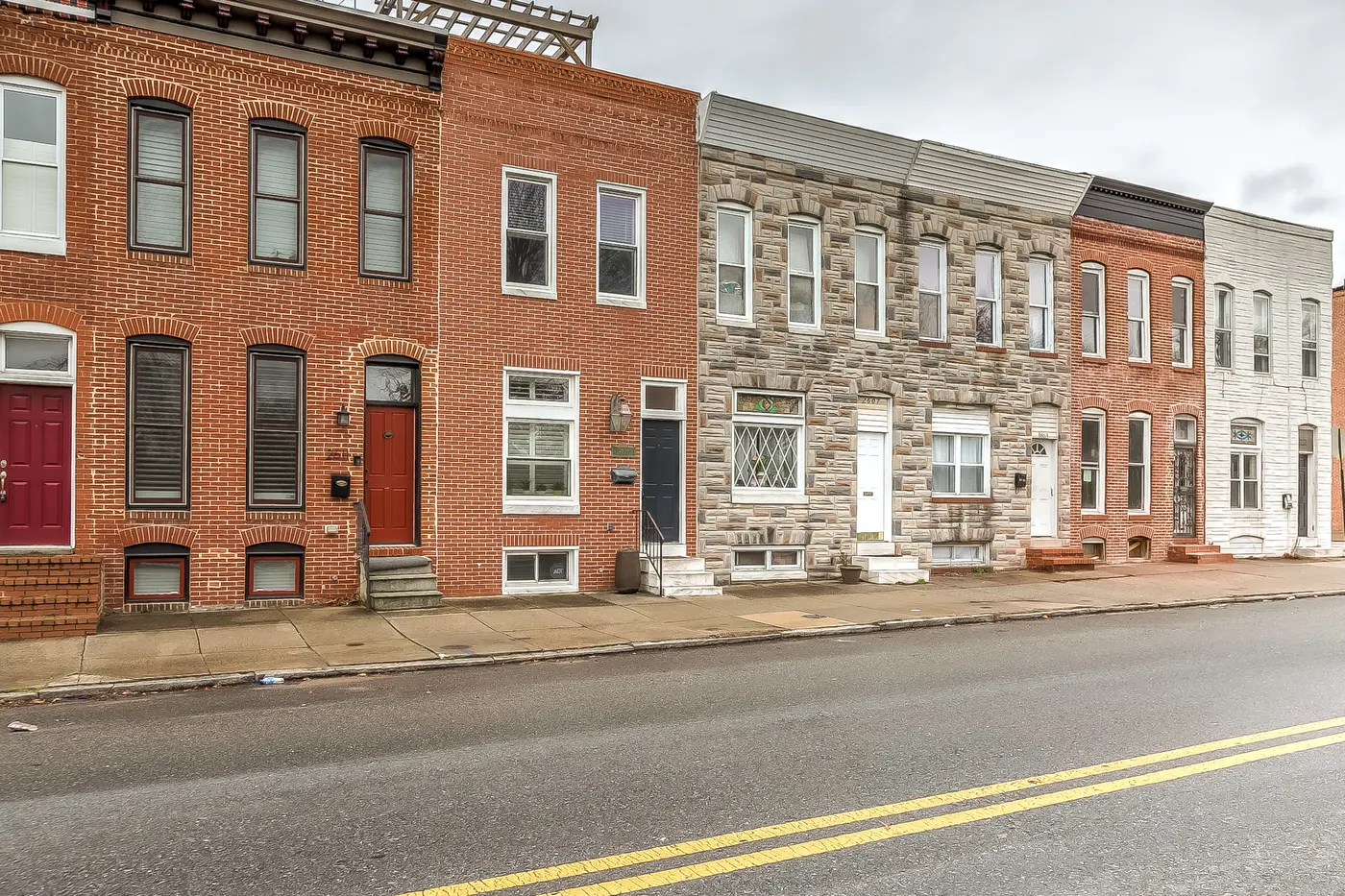
The short answer: you can sell a Maryland house as-is in almost any situation, from an inherited house full of belongings to a rental with tenants still living in it. What changes from one situation to the next is whether a quick cash sale or a regular listing puts more money in your pocket. The only way to know is to see both numbers side by side before you sign anything.
I’m Ron Howard, Broker of Everything Real Estate in Fells Point. We have helped Baltimore-area homeowners since 2005, and we both buy houses for cash and list them on the MLS. Below are the nine situations we see most often, what matters in each one, and a link to a page with the details for your situation.
Find your situation
- The house needs repairs: anything from a dated kitchen to a bad roof or foundation
- You inherited a house: with or without probate, full of belongings or empty
- You’re behind on mortgage payments: before or after a foreclosure notice
- You owe more than the house is worth: underwater or close to it
- You’re selling during a divorce: two owners who need the same facts
- It’s a rental with tenants: done being a landlord, lease or no lease
- You’re relocating: a new job, family or military orders on a deadline
- The house has code violations: open notices, permits or fines
- You’re just tired of the house: too big, too much work, ready for what’s next
First, what “selling as-is” really means
Selling as-is means you don’t make repairs before the sale. It doesn’t mean you have to take a lowball offer. There are two ways to do it:
- A cash sale. A buyer purchases the house in its current condition, usually with no showings and no loan approval. These sales often close in 20 to 30 days.
- An as-is listing. The house goes on the MLS in its current condition, where both owner-occupants and rehabbers can bid on it. This usually brings a higher price but takes longer.
Most cash buyers, including us, start from a common rule of thumb: about 70% of what the home would be worth after repairs, minus the cost of those repairs. So on a house worth $300,000 fixed up that needs $40,000 of work, a cash offer would be around $170,000. Listed as-is, the same house might sell for $240,000, and after about 6% commission and 1.5% transfer tax, you would net roughly $222,000. Those are illustrative numbers only. Sometimes the cash number wins once you count holding costs, repairs and time. That’s why we show you both. Here’s how the side-by-side comparison works.
1. The house needs repairs
Not every “as-is” house is falling apart. Often it’s a dated kitchen, an older roof or a furnace near the end of its life. Small, cosmetic work like paint and carpet sometimes pays for itself on the market. Big-ticket items like a roof, foundation or water in the basement usually don’t, and they can stop a buyer’s loan from going through. The right move depends on the size of the work, which is why we walk the house and price it before recommending anything.
Selling a house that needs repairs in Maryland →
2. You inherited a house
Settling a loved one’s estate is hard enough. In Maryland, an inherited house is usually sold by the personal representative of the estate, and your estate attorney will confirm what’s needed in your case. You don’t have to clean out the house or fix anything first. Many families choose a cash sale to avoid months of utilities, taxes and upkeep on an empty house, while others list it to get the most for the estate. Seeing both numbers makes it easier for every heir to agree.
Selling an inherited house in Maryland →
3. You’re behind on mortgage payments
Falling behind happens to good people. Before anything else, call your lender and a free HUD-approved housing counselor. Maryland’s foreclosure process includes required notices and, for owner-occupied homes, the chance to request mediation, so you often have more time and more options than you think. If selling is the right answer, the earlier you act, the more choices you have, and a sale can protect your credit and whatever equity you’ve built.
Options when you’re behind on mortgage payments →
4. You owe more than the house is worth
Being underwater is stressful, but it isn’t a dead end. The first step is knowing exactly how big the gap is. We’ll show you what the house would sell for as-is and listed, so you can go into a conversation with your lender about a short sale, or other options, with real numbers in hand.
Selling when you owe more than the house is worth →
5. You’re selling during a divorce
When two owners need to agree, facts help more than opinions. We give both owners the same cash offer and listing estimate, side by side, and we stay neutral. We’re happy to work with both of you and with your attorneys so the house doesn’t become one more thing to argue about.
Selling a house during a divorce in Maryland →
6. It’s a rental with tenants
Done being a landlord? You don’t have to wait for the lease to end or empty the property first. Some buyers, especially investors, are glad to buy a house with a tenant in place, while an owner-occupant buyer will usually want it vacant. We’ll show you what each route nets and help you handle notices and showings respectfully, following the lease and Maryland landlord-tenant law.
Selling a rental property with tenants →
7. You’re relocating
A new job, family or military orders can put you on a tight clock. A cash sale lets you pick your closing date and leave without carrying two homes. A listing can bring more money if you have a few extra weeks. Either way, we can handle much of the process remotely, with video walkthroughs and electronic signing.
Selling your house when you’re relocating →
8. The house has code violations
Open violation notices, a vacant building notice or unpermitted work can scare off buyers who need a loan. You can still sell. Violations have to be disclosed, and many cash buyers are set up to take them on and work through them with the city or county after closing.
Selling a house with code violations →
9. You’re just tired of the house
Sometimes there’s no crisis at all. The house is too big, the stairs are getting harder or you’re ready for something new. If the house is in decent shape and you’re not in a hurry, listing usually wins. If you’d rather skip the prep, showings and repairs, a cash sale keeps it simple. We especially love helping seniors downsize while keeping as much of their equity as possible.
Ready to sell a house you’re tired of? →
Before you sign any cash offer
Many “we buy houses” companies are wholesalers. They put your home under contract, then sell that contract to another buyer for a fee, and that fee is equity that could have stayed with you. When we make a cash offer, we close on it ourselves, and if we ever plan to assign a contract, we tell you in writing up front, as Maryland law requires. Read this before you sign a cash offer.
Common questions
Can I sell my house as-is in Maryland?
Yes. You can sell a house in any condition, either to a cash buyer or by listing it as-is on the MLS. You still need to provide the disclosures Maryland requires, but you don’t have to make repairs.
Will a cash offer be lower than listing?
Usually, yes. A cash buyer is paying for repairs, holding costs and risk. The question is whether the difference is worth the speed and certainty to you, and the side-by-side comparison shows you exactly how big that difference is.
How fast can I sell for cash?
We can usually get you a cash offer within 72 hours, and cash sales typically close in 20 to 30 days. Some situations, like probate, can take longer.
Does it cost anything to get my options?
No. The comparison is free and there’s no obligation. Many sellers list with us after seeing the numbers, and some decide to do nothing at all.
What areas do you serve?
Baltimore City, Baltimore County, Anne Arundel County, Howard County, Harford County and Carroll County. See the areas we serve.
See both of your numbers
Whatever your reason for selling, the first step is the same: tell us about the house, and we’ll show you a real cash offer and your likely listing net, side by side, usually within 72 hours. Every request comes to me first. Get my options or call 443-414-3338.
Ron Howard is the Broker of Everything Real Estate, LLC, a licensed Maryland real estate brokerage at 1909 Thames Street, Baltimore, MD 21231 (443-596-0846). This article is general information, not legal, tax or financial advice. Talk with an attorney, tax professional or HUD-approved housing counselor about your specific situation.